
Organic September: What Does Choosing Organic Really Mean?
This Organic September, we are looking beyond the label. We know organic food is produced to a different set of standards, but what does that actually mean for the food we eat, the people who grow it and the environment it comes from?
As part of a wider conversation we’re having about how food is grown, pesticide use and making better grown food more accessible, we spoke to Anne Rees at the Soil Association to unpack what organic really means and where responsibility for changing our food system should sit.
The Basics & The Differences
1. Let’s start with the basics. When something carries the Soil Association Organic label, what does that actually tell us about how it has been grown or produced?
Think of the Soil Association Organic logo as a shortcut to a whole set of high environmental and animal welfare standards.
Organic farming works with nature rather than trying to override it. Farmers don't use artificial fertilisers or routine synthetic pesticides, and genetically modified ingredients aren't allowed. Instead, they build healthy soils through practices like crop rotations, composting and encouraging biodiversity.
For livestock, organic standards also mean higher welfare requirements, including more space, access to the outdoors and feed that's grown to organic standards.
So when you see the Organic logo, you're not just buying a product, you're supporting a farming system that's designed to protect nature, care for animals and build healthy soils for the future.
2. Pesticides can be a confusing subject. How does pesticide use differ between organic and conventional farming, and does choosing organic mean the food is completely pesticide-free?
It's a really common misconception that organic means "never touched by a pesticide". All farming systems sometimes need to manage pests, diseases and weeds. The difference is that organic farmers can only use a very limited range of naturally derived substances as a last resort, while conventional farming can use a much wider range of synthetic pesticides.
Organic farming focuses first on prevention: healthy soils, diverse crop rotations, pest-resistant varieties and creating habitats for beneficial insects that naturally keep pests in balance.
The result is that organic food is much less likely to contain synthetic pesticide residues. But because farming happens outdoors and traces can sometimes drift from nearby farms or be found in the wider environment, "organic" doesn't necessarily mean completely residue-free. What it does mean is that synthetic pesticide use is heavily restricted and tightly controlled.
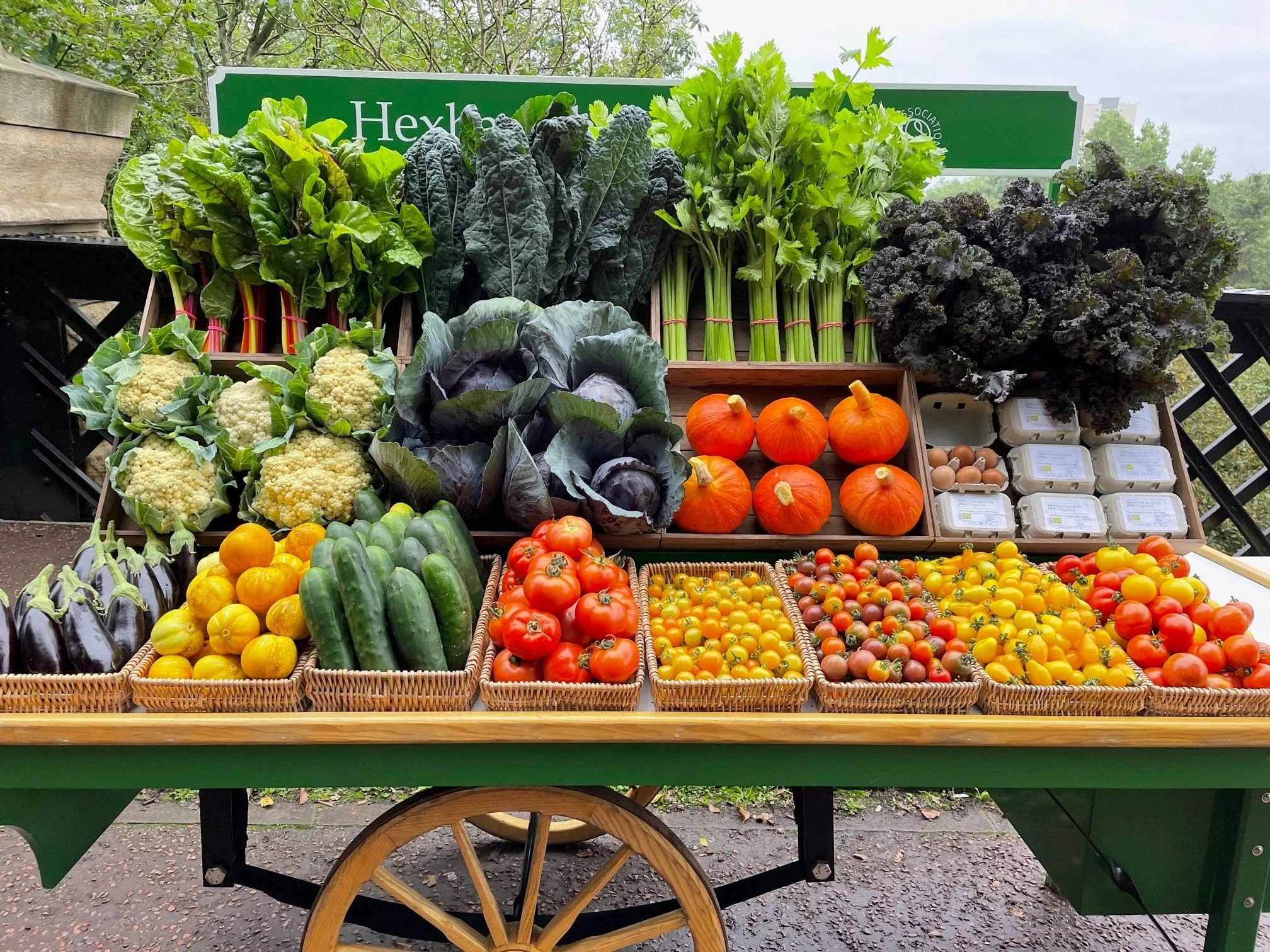
Hexhamshire Organics Farm
Health & Environment
3. From a human health perspective, is the primary benefit of organic food what it doesn't contain (synthetic pesticide residues) or what it does contain (like higher nutrient levels)?
Honestly, it's probably both! Many people choose organic because it reduces exposure to synthetic pesticide residues. That's one of the clearest differences between organic and non-organic food.
At the same time, some studies have found higher levels of certain beneficial compounds, such as antioxidants, in some organic crops.
What organic offers is a farming system approach that combines lower pesticide exposure, healthier soils, better animal welfare and positive environmental outcomes. That's where the biggest story lies.
4. We’re increasingly talking about the connection between planetary health and human health at Pow Food. Is there a direct link between the health of organic soil and the health of our own bodies and gut microbiomes?
I love this idea - biodiversity in all things! Scientists are still unpicking exactly how these connections work, but the direction of travel is really exciting. Healthy soils are incredibly alive. A teaspoon of soil can contain billions of microorganisms that help cycle nutrients, support plant health and build resilience in farming systems.
We're learning that diverse diets, rich in plant foods grown in healthy ecosystems, can help support diverse gut microbiomes too. While we can't say that eating an organic carrot directly changes your gut microbiome in a specific way, we can say that healthy people ultimately depend on healthy ecosystems.
It's a good reminder that food doesn't begin on a supermarket shelf. It begins in the soil.
5. What impact can reducing our reliance on synthetic pesticides have on biodiversity, waterways, and the people working on the farms?
Reducing synthetic pesticide use can bring benefits far beyond the field itself. Farmers often tell us that one of the most noticeable changes after transitioning to organic is simply seeing more life: more pollinators, more birds and more wildlife returning to farmland.
Fewer synthetic pesticides can also help reduce pollution pressures on rivers and waterways. And there's growing recognition that reducing exposure to potentially harmful agricultural chemicals is important for the people who work with them day in and day out.
In short, cutting pesticide reliance isn't just about what's on our plates. It's about creating healthier farm ecosystems and healthier working environments.
Accessibility & Action
6. One of the biggest barriers to organic is still cost. Why does organic food often cost more, and what needs to change to make it accessible to more people?
This is probably the question we're asked most often. Organic farmers are delivering a range of environmental benefits that aren't always reflected in food prices. Building soil health, supporting wildlife and providing higher animal welfare standards takes time, skill and investment.
Organic farmers also can't rely on some of the cheaper shortcuts available in conventional systems, such as synthetic fertilisers and routine chemical inputs. Yields can sometimes be lower too.
The bigger question is why food that damages nature can often appear cheaper. Many environmental costs, like water pollution or biodiversity loss, are paid for by society rather than included in the price tag.
To make organic more accessible, we need a combination of increased demand, supportive public policy and food systems that properly reward farmers for delivering environmental benefits.
7. If someone can’t afford to buy everything organic, is there a sensible way to prioritise? Are there particular foods or categories where you would suggest choosing organic first?
Absolutely. Nobody should feel that it's all or nothing. The most important thing is eating plenty of fruit, vegetables and whole foods in general.
If you're looking to prioritise some organic, many people choose to start with foods they eat most often. Others choose products where organic farming standards bring wider benefits, such as dairy, eggs or meat, because of the additional animal welfare and environmental standards involved.
For your fruit and vegetables you might like to start with those usually consumed raw or with higher water content where residues would be more prevalent in conventional systems, for example spinach, grapes and strawberries.
Another great approach is simply to buy one or two organic staples regularly rather than trying to switch everything at once. Small changes are still meaningful, and every organic purchase helps support farmers using nature-friendly methods.
Systemic Change
8. Pow Food serves food within workplaces and at events, meaning one purchasing decision can influence what thousands of people eat. How important is institutional and business purchasing power in supporting organic farmers and creating demand?
It's hugely important! When businesses, caterers and public institutions choose organic, they're creating stable, predictable demand that helps give farmers the confidence to invest in organic production.
A single catering contract can have an impact far beyond one meal. It influences supply chains, supports farming businesses and introduces more people to organic food, often for the first time.
If we want healthier and more sustainable food systems, procurement decisions are one of the most powerful tools available.
9. What would farmers need in order to transition more land towards organic or lower-pesticide farming? Is increased demand enough, or does there need to be greater financial or policy support?
Demand is essential, but supply needs support as well. Transitioning to organic takes time. Farmers typically go through a conversion period before they can sell produce as organic, which can create financial pressure even while they're investing in new approaches.
That means farmers need a combination of strong markets, practical advice, fair supply chains and supportive government policy. Financial incentives can help reduce risk, while long-term policy certainty gives farmers confidence to plan ahead.
Most farmers want to leave their land in a better condition than they found it. The challenge is creating an economic system that supports them to do that.
10. Finally, what’s one thing you’d like people to understand about organic food this Organic September that they perhaps don’t know already?
I'd love people to know that organic isn't just about what's missing from food. It's about the whole farming system behind it.
When you choose organic, you're supporting healthier soils, more wildlife-friendly farming, higher animal welfare standards and a food system that aims to work with nature rather than against it.
Organic isn't a luxury version of the same thing. It's a different way of producing food, and every organic purchase helps more of that kind of farming thrive.
Looking Beyond the Label
Our conversation with the Soil Association makes one thing particularly clear: organic is not simply about an individual product or the absence of one particular input. It represents a different approach to the entire farming system.
Individual choices can help create demand, but consumers cannot carry the responsibility alone. Businesses, caterers, institutions, policymakers and the wider food industry all have a role to play in making better grown food more accessible and supporting farmers who want to work differently.
We serve food to people every day. That gives us both an opportunity and a responsibility to ask more questions about how the ingredients we use have been grown and to use our purchasing decisions to help support a healthier food system for people and the planet.