The Unpeeled Truth
What’s really on our plate?
Sustainable food procurement has become increasingly sophisticated. Businesses measure carbon, reduce food waste, consider packaging, provenance, seasonality and biodiversity.
But what about human health?
We believe the way food is grown should be considered alongside its environmental impact.
The Unpeeled Truth looks at pesticide residues in our food, what the current evidence tells us, what individuals can practically do, and, importantly, what organisations responsible for feeding people at scale should be asking of their food supply chains.
Start with a strawberry
Pesticide Action Network UK’s analysis of UK Government testing data found PFAS pesticides in 95% of strawberry samples tested, including 91% of UK-grown strawberries.
PFAS pesticides were also detected in:
61% of grapes
56% of cherries
42% of spinach
38% of tomatoes
These figures require context. Detection does not automatically mean a food is unsafe, the UK monitors pesticide residues against established safety limits, and the vast majority of food tested complies with them, but compliance shouldn’t stop us asking questions.
The data raises a wider issue about how our food is produced, what information is available to buyers and whether human health is adequately considered within sustainable food procurement.
Not everything washes off
Some pesticide residues remain predominantly on the surface of produce. Others are systemic, meaning they can be absorbed and move within the plant.
Washing, soaking, trimming and peeling can reduce certain surface residues, but they cannot necessarily remove everything.
The bigger opportunity is procurement
A consumer can wash a strawberry. A business feeding hundreds or thousands of people can influence which strawberry enters the supply chain in the first place.
That is where we believe the conversation needs to go next.
Food procurement decisions made at scale can influence farming practices, ingredient quality, supplier standards and ultimately what ends up on thousands of plates.
Yet corporate sustainability strategies can focus heavily on environmental measures without applying the same scrutiny to the potential impact of food procurement on human health.
We think the two should be considered together.
What does better procurement look like?
It starts with asking more of the supply chain.
How was this food grown?
What farming practices were used?
Can organic be prioritised for particular ingredients?
How transparent is the supply chain?
Are we considering nutritional quality alongside environmental impact?
Can suppliers provide the information procurement teams need to make better decisions?
These aren't questions for consumers alone. They are questions for caterers, procurement teams, workplace leaders, landlords, sustainability teams and the organisations setting standards for the built environment.
What we’re doing at POW Food
At Pow Food, more than 75% of the ingredients we use each day are organic.
We prioritise seasonal produce, work closely with our growers and suppliers, and consider human health alongside environmental impact when designing our menus and making sourcing decisions.
Our approach is also informed by our work within the WELL framework, where food and nutrition form part of creating healthier environments for people.
But we don't think this should stop with our own supply chain.
Protein on our menus
Taking the conversation to Blue Earth
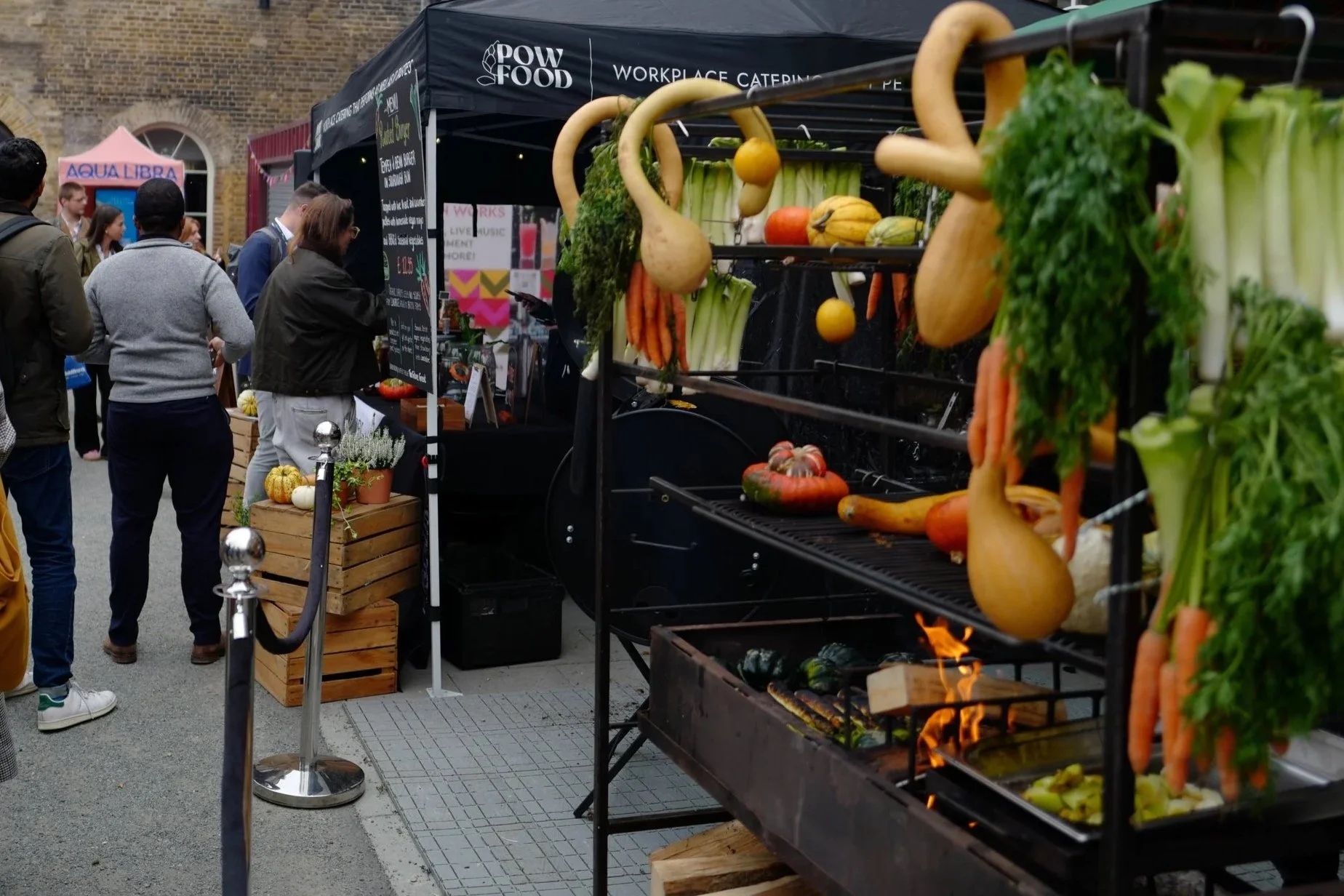
At the Blue Earth Summit, Pow Food is taking this question to a wider group of leaders across business, sustainability, food and health:
How do we put human health on the sustainable food procurement agenda?
Our roundtable will explore what needs to change at an organisational level, from greater supply-chain transparency and smarter organic procurement to the information businesses should expect from their caterers and suppliers.
The ambition is to move beyond discussion and begin defining practical principles for better food procurement that businesses and caterers can use when making decisions about the food they serve.
Because organisations already ask:
What is the carbon impact?
Where was it sourced?
How much waste will it create?
We believe there should be another question alongside them:
What is the impact on human health?
Pow Food × Blue Earth
Putting human health on the sustainability agenda.
Sources and Further Reading
The Unpeeled Truth draws on UK Government monitoring and independent research into pesticide use, residues, PFAS and food preparation.
Pesticide Action Network UK (PAN UK)
Analysis of UK Government pesticide residue monitoring data, including PFAS pesticides detected in UK fruit and vegetables.
Expert Committee on Pesticide Residues in Food (PRiF)
UK pesticide residue monitoring reports and assessments.
Health and Safety Executive (HSE)
Information on pesticide regulation, Maximum Residue Levels and pesticide residues in food in Great Britain.
Fidra
Research and resources exploring PFAS, including PFAS pesticides and their environmental impact.
University of York
Research into pesticide residues and food preparation.