
Pow Food Becomes the First Caterer in the World to Achieve ‘Works with WELL’ Designation
Workplace wellbeing is no longer a nice to have, it is increasingly built into the design and operation of modern offices.
Air quality, light exposure and thermal comfort are now measured, monitored and certified through frameworks like the WELL Building Standard, the international benchmark for healthy buildings.
But one element of workplace wellbeing has historically been overlooked.
Food.
Pow Food is proud to become the first catering company globally to achieve the ‘Works with WELL’ designation, aligning our food practices with the WELL Nourishment standards that support healthier buildings.\
Jessica Cooper, IWBI Chief Product Officer says“Congratulations to Pow Food for becoming the world's first catering company to earn the Works with WELL designation by aligning its food practices with WELL Nourishment features.. By achieving Works with WELL status, Pow Food is setting a new global benchmark for the food industry and demonstrating leadership in creating food environments that are transparent, inclusive and supportive of better outcomes for people and organisations alike.”
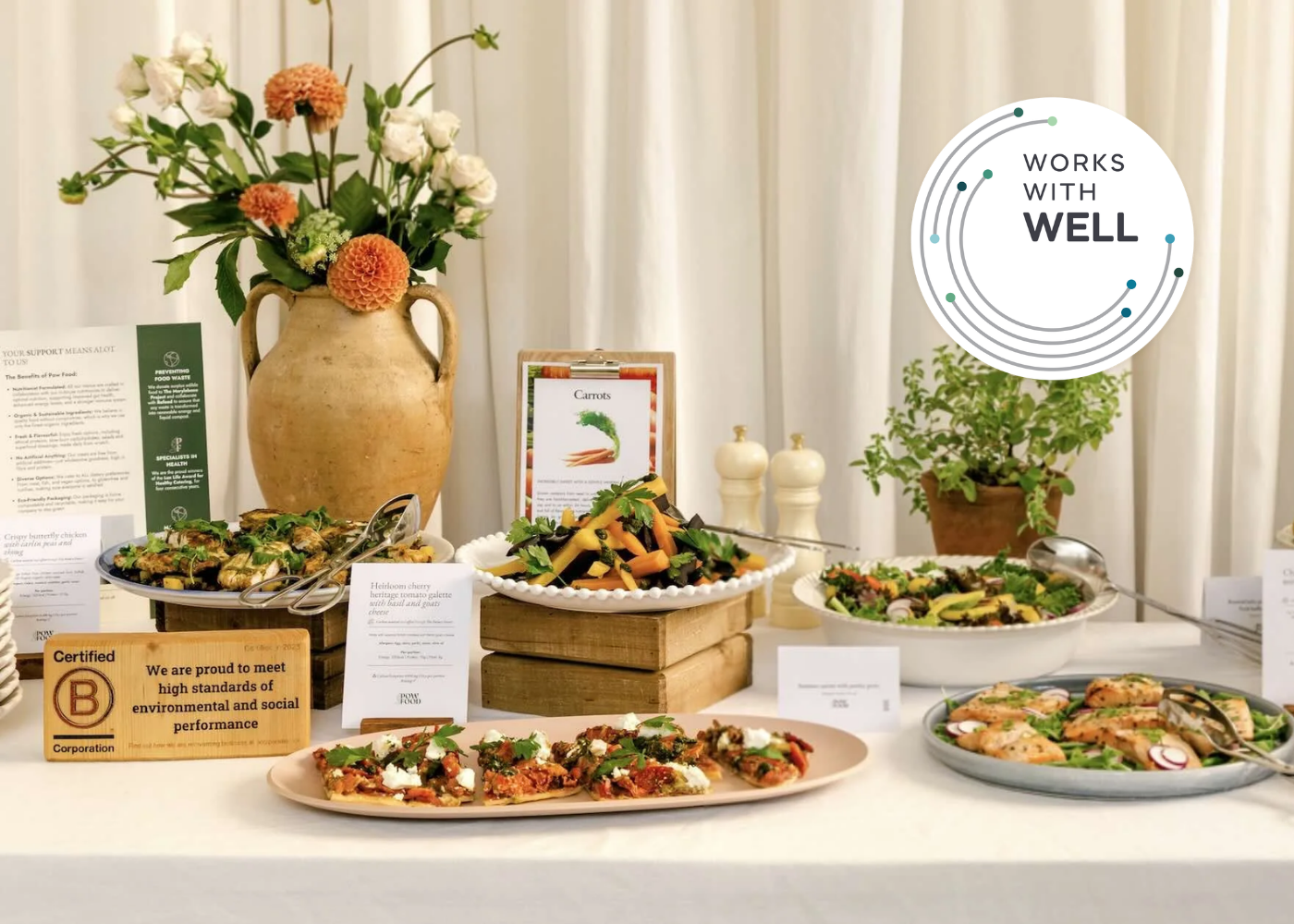
What Is the WELL Building Standard?
The WELL Building Standard is an international certification framework designed to improve health and wellbeing within buildings.
It measures how spaces support human health across areas including:
Air quality
Light exposure
Movement
Mental wellbeing
Nourishment
Developed by the International WELL Building Institute (IWBI) and verified by Green Business Certification Inc. (GBCI), the standard is used by organisations worldwide pursuing Gold or Platinum WELL certification for their offices.
While the built environment has traditionally focused on lighting and ventilation, WELL recognises that food is equally fundamental to workplace performance.
Why Food Matters in Workplace Performance
For years, workplace food has been treated as an amenity, but research increasingly shows that nutrition plays a direct role in energy, concentration and long-term health.
WELL certified environments have demonstrated:
10–15% improvements in productivity
Reduced fatigue
Lower symptoms associated with “sick building syndrome”
Food environments that prioritise whole ingredients, balanced nutrition and transparency can directly support these outcomes.

What ‘Works with WELL’ Means
The Works with WELL designation recognises companies whose products or services support WELL features.
For catering providers, this means aligning with the WELL Nourishment framework, which focuses on:
Ingredient transparency
Promotion of whole foods
Responsible sourcing
Unlike companies that simply reference WELL principles, Pow Food’s food practices underwent independent third-party review. This verification establishes Pow Food as a recognised partner for organisations pursuing WELL Building Certification.
How Pow Food Meets WELL Nourishment Standards
Pow Food’s approach to workplace catering has always centred on nutrition and ingredient integrity.
Today:
• Over 75% of our ingredients are organic
• Menus prioritise whole foods and balanced nutrition
• Ingredient sourcing is transparent and traceable
• High-residue produce identified in the “Dirty Dozen” is prioritised for organic sourcing to reduce pesticide exposure
These standards support sustained energy, improved focus and long-term workforce wellbeing.

A New Standard for Workplace Food
As organisations increasingly invest in healthy buildings, food should no longer be treated as a secondary consideration.
It is part of the infrastructure that supports how people perform, think and feel at work.
As Emily Warburton-Adams, our Co-founder and Head of Sustainability at Pow Food explains:
“Modern workplaces rigorously measure air and light, but rarely food, a fundamental blind spot. If workplace health truly matters, good food shouldn’t be an optional perk; it should be built into the infrastructure of the building.”
Becoming the first caterer globally to achieve the Works with WELL designation marks an important step in recognising the role food plays in healthier workplaces, and it signals a shift in how organisations think about catering.