
What Sustainability Really Means to Us
5 principles we share with every client
Sustainability is often talked about in headlines but in practice, it’s shaped by thousands of small, everyday decisions.
In workplace catering, those decisions matter more than most people realise. Food choices influence carbon impact, health, energy levels, waste and supplier ecosystems, all at once.
As the UK’s first certified BCorp Catering company, we always take an impact first approach. That means focusing on the things that genuinely move the needle, not the things that simply look good on paper.
Here are the five sustainability principles we guide every client through, regardless of size or sector.
1. Start with sourcing, not offsets
Carbon offsetting has a role, but it should never come before responsible sourcing.
Seasonal produce, ethical farming practices and transparent supply chains reduce environmental impact at the source. This approach also supports biodiversity, soil health and better nutrition.
The most sustainable food is food that is grown well, sourced responsibly and used properly.
Food systems account for around one-third of global greenhouse gas emissions, with agriculture and land use as major drivers. Improving sourcing has an immediate effect.
2. Build menus around plants
Plant forward eating doesn’t mean removing choice or labelling food as “healthy”.
It means designing menus where vegetables, legumes, grains and herbs lead the plate, with animal products used thoughtfully and in balance.
This approach:
Lowers carbon impact
Improves fibre intake
Supports sustained energy throughout the working day
And importantly, it still tastes good!
3. Buy less, but buy better
More choice often creates more waste.
We encourage tighter menus built around higher-quality ingredients. This simplifies operations, improves consistency and significantly reduces surplus food.
When food is well thought through, people eat it and less ends up in the bin.
Food waste contributes 8–10% of global emissions. Prevention, not composting delivers the biggest benefit.
4. Treat food waste as a systems issue
Food waste isn’t caused by “bad behaviour”. It’s caused by poor design.
Portion sizing, forecasting, clear labelling and intuitive ordering systems all play a role. When these are right, waste reduces without needing constant reminders or interventions.
Good systems make the sustainable choice the easy one.
5. Make sustainability feel normal
The most effective sustainability strategies don’t rely on willpower.
They’re built into everyday decisions, so people benefit from them without having to think about it.
When sustainability becomes part of the rhythm of work life, it sticks.
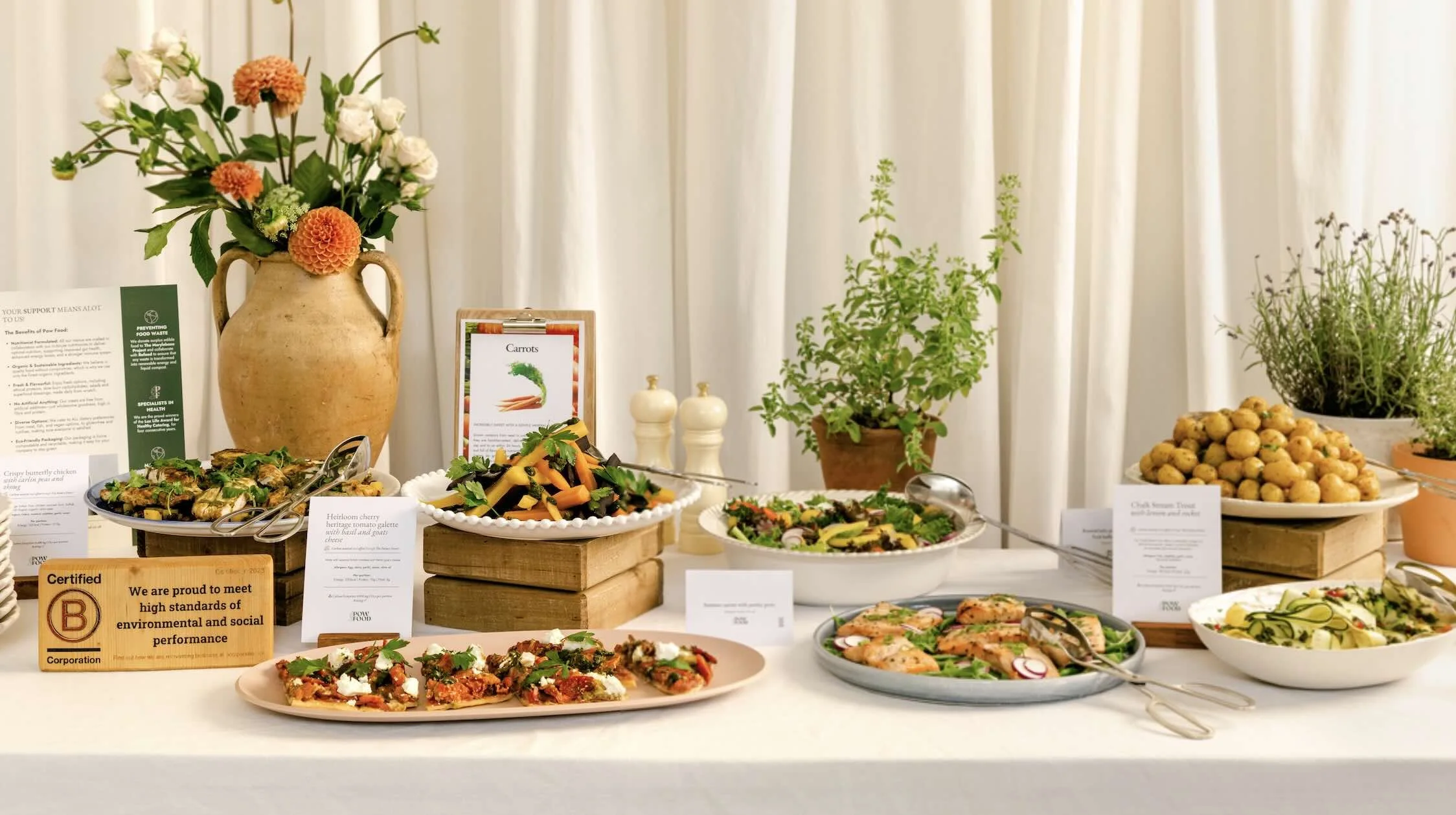
Pow Food Catering Workplace Buffet
Sustainable food at work isn’t about perfection, it’s about momentum.
Small, consistent improvements compound, for people, for businesses and for the planet.
If you’re reviewing your workplace food strategy this year, start with what’s on the plate. It’s one of the most powerful levers you have.
Looking to make food at work more sustainable without adding complexity? Get in touch with our team to explore practical, nutrition-led catering solutions.